
Khe Sanh
3 March 2025
By: Centre For The Australian Way Of Life
Cold Chisel, 1978
Cold Chisel’s 1978 song ‘Khe Sanh’ sits in the great Australian tradition of the melancholic anthem. Alongside ‘The Wild Colonial Boy’, ‘And the Band Played Waltzing Matilda’ and ‘Waltzing Matilda’ itself, Khe Sanh, the story of a Vietnam vet’s ennui, is a raucous Australian campfire sing-along, yet has us reaching for our tissues:
I left my heart to the sappers 'round Khe Sanh
And my soul was sold with my cigarettes to the black-market man
I've had the Vietnam cold turkey, from the ocean to the Silver City
And it's only other vets could understand.
The song is not all outback description: it conjures images of city life, loneliness and longing, while powerfully summing up the isolation that makes Australia – and the experience of Australian people – unique in the world:
Standing at the limit of an endless ocean
Stranded like a runaway lost at sea …
Anyone will tell you it's a prisoner island
Cold Chisel’s chief songwriter Don Walker wrote the song, which is all verse and no chorus, and it appeared on their self-titled debut album. In 2001, APRA voted Khe Sanh Australia’s number-eight song of all time, while in 2014 it was inducted into the prestigious National Film and Sound Archive of Australia. Not bad for a track that, when released, didn’t even crack the then-vaunted Top 40, possibly because commercial radio banned it due to its R-rated content:
And their legs were often open, but their minds were always closed
And their hearts were held in fast suburban chains…
And car parks make me jumpy, and I never stop the dream
Or the growing need for speed and Novocaine.
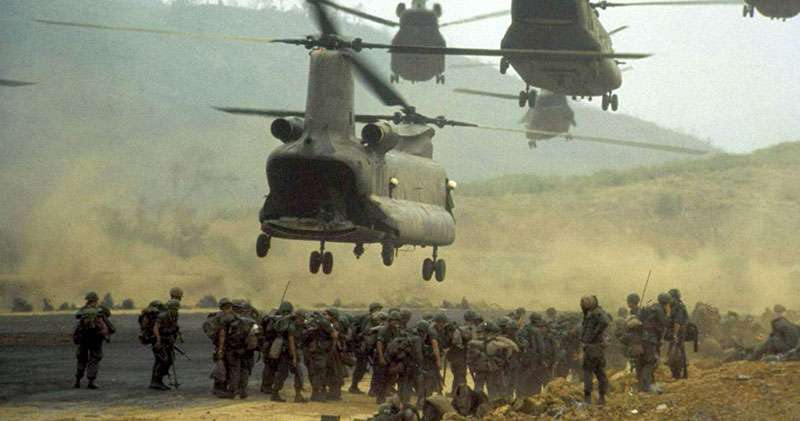
Introduced by Walker’s rollicking piano riff, Khe Sanh, named after an area in Vietnam's Hướng Hóa district and site of a 1968 battle*, gets to the nitty gritty of the returned soldier’s dissatisfaction with life upon his return to the “lucky land”. Over harmonica and acoustic guitar, Jimmy Barnes sings of our anti-hero’s struggles with narrow-minded women, post-traumatic stress, dead-end jobs, drug use, and the overall sense his country doesn’t want him, or to remember the war he fought in. The song’s refrain, “the last plane out of Sydney’s almost gone”, becomes his ticket to a freedom that is no more than transplanting his ennui – he’s going “back to South-east Asia”, just to look around, and bed prostitutes.
Khe Sanh also occupies a hallowed place in Australia’s anti-war and protest song tradition. It’s not as strident as Eric Bogle’s aforementioned ‘And the Band Played Waltzing Matilda’ (1971), which sings of the gruesome maiming of a Gallipoli veteran, nor a track like Yothu Yindi’s ‘Treaty’ (1991). But it laid the ground for anti-war anthem like Redgum’s ‘I Was Only 19’ (1983) and the many anti-nuclear weapons and Cold War warnings that Midnight Oil hit the charts with in the 1980s and ‘90s.
Still, Khe Sanh’s popularity exists beyond these comparisons, drawing its public favour from the same well (or billabong) as Waltzing Matilda, and for the same reason Australians effectively celebrate the birth of our nation on Anzac Day, commemorating the massacre of Australian troops on foreign soil at the behest of the British empire. Khe Sanh thumbs its nose at authority, the so-called good life of suburbia, and says that playing by social rules will never work if those who made the rules don’t want you in their society.
In the melancholic anthem tradition, Khe Sanh’s protagonist’s solution to his predicament is like that of Waltzing Matilda’s swagman, who dived into a billabong to avoid authorities. Our Vietnam vet is set to catch his plane out of Sydney to avoid an overarching cultural authority that has ruled him persona non grata for participating in an unpopular war, yet one his country had demanded he serve in.
That a song like Khe Sanh is a cultural staple says a lot about part of the Australian psyche, one that appears drawn from our convict heritage. Khe Sanh’s protagonist is in a psychological prison and the song’s popularity underscores again that in this nation’s heart is a love for those who battle against the odds, especially those who do their duty but remain unrewarded.
Like our passionate love for Waltzing Matilda’s swagman, who would rather suicide than be captured by the police, we cheer for a bloke in Khe Sanh who some might call a loser, a man who would rather seek comfort in the part of the world where he was emotionally wounded than stay and fester as an outcast in Australia. Khe Sanh might be a beer barn classic, sung drunkenly at barbies, weddings, and birthday bashes, but in every shouted “the last plane out of Sydney’s almost gone” an Australian reveals a bit of their soul.
* A battle fought by Americans, not Australians.
The lyrics to Khe Sanh can be found here.
Image Battle of Khe Sanh, Vietnam, 1968, attribution: TommyJapan1, Flickr
This appreciation of ‘Australia’ was authored by Melbourne writer and academic Heath Remington, in 2025, specifically for The Genius of Australia.
