
The Chant of Jimmie Blacksmith
16 July 2025
By: Centre For The Australian Way Of Life
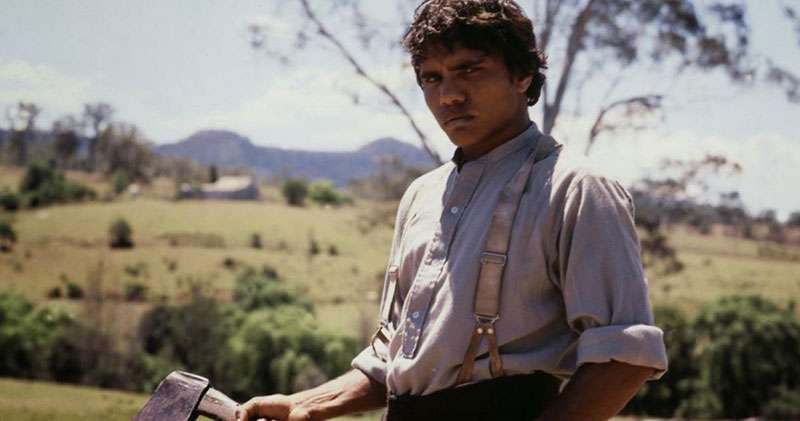
Still from the movie, The Chant of Jimmie Blacksmith, 1978
Thomas Keneally, The Chant of Jimmie Blacksmith, 1972
Here is Thomas Keneally writing in 2013 about the background to his most notable book which appeared in 1972:
At the time I started to write the book, Australians had passed, by a huge majority, a referendum that enabled the Federal Government to legislate for Aborigines. This signalled the liberation of Aborigines from being wards of the States (like children and imbeciles), and gave them a new level of control over their destinies, as well as endowing all of them with the vote. And yet in terms of health and acceptance, things seemed the same as they had been in 1901, when Jimmie Blacksmith (and his model Jimmy Governor) did everything to prove his reliability in European terms, and was still rejected. Half-caste or full blood, the destiny of the race still seemed bitter, as it is to this day.
The Chant of Jimmie Blacksmith is one of the most formidable things he has ever done. If Bring Larks and Heroes close to the outset was a novel buoyed and brightened by the influence of Patrick White, creating a flexibly fictive convict Australia which also recalled the parables of Camus and the historical pastiche of Arthur Miller in The Crucible, this novel shows Keneally at the height of his powers presenting a vision of history that is grave and ghastly but has an absolute ring of truth.
Keneally (1935 - _) has always had a fascination with history and you could argue that it is his fatal Cleopatra for which he thinks the world is well lost. That has a pertinence to his other convict novel The Playmaker and it even has its application to his most famous book internationally Schindler’s Ark which became Schindler’s List when Spielberg turned it into the story of the kindest of people smugglers and succeeded against all the odds in making an uplifting concentration camp film. It included the dazzling sequence with the girl in red in the black and white Polish ghetto. And there was also Liam Neeson’s portrait of a convincing good man which was in turn outshone by Ralph Fiennes in the performance which took the world’s attention as a weak and cruel Nazi commandant.
But when D.J. Enright reviewed the book he said that it was a great story but it had better be true, meaning presumably that it was a moving collection of facts told with modest verve but it did not have the deeper truth of a work of art. Some years later Keneally wrote a book about the horrors of Saddam’s Iraq, using the simple technique of giving the characters Anglo-Saxon names. It works in its limited way brilliantly.
But there has always been a radical unevenness about Keneally. On one occasion a critic wrote that he had started out as the successor to Patrick White and ended up as the successor to Morris West. This tallies with George Steiner’s comment in the New Yorker, “Mr Keneally's last book was an interesting failure. This one awaits the next Gregory Peck”.
Yes, but which Gregory Peck? Atticus Finch in To Kill a Mockingbird or Ahab in John Huston’s tumultuous if mannered Moby Dick?
On a good day Thomas Keneally is a literary novelist of the first rank who also has the wide-ranging momentum of a novelist of great breadth of appeal who can hold any readership with his command of an irresistible story: and The Chant of Jimmie Blacksmith is Keneally on the best of days.
It’s the story of a missionary Indigenous boy who runs away from the minister who looks after him in order to go through the ritual ordeal of circumcision and is caned for his pains though he is a genial trusting boy who is consistently easygoing despite the white Australians who are no better than they should be and make a point of ripping him off when it comes to wages (on one occasion because the employer is illiterate). But our hero is consistently likeable. He smiles at a world that snarls at him or treats him with a bored indifference which is the other side of more or less complete callousness.
All of this is done with great care and attention. The period is 1900 with Federation looming and the Boer War insinuating brutalities on the other side of the world.
But Keneally ensures that the white settlers are as rounded as possible so that the ultimate effect of what happens in The Chant of Jimmie Blacksmith is heartbreaking because it is in no way melodramatised.
He meets a white girl and falls in love with her and vice-versa. She gets pregnant and is quite advanced by the time they marry. Then the baby is born and everyone knows it will be at least brown but it is as white as snow. Because of the power of Keneally’s conception the terrible story works.
Our likeable, easygoing, easily pushed around hero goes mad, he falls into a pit of rage from which he never recovers and the upshot is ghastly murder of the most horrifying kind. Even though we’re waiting for this moment because the boy with the angel smile is bound to crack the upshot is terrifying. It’s as if the true story of Jimmy Governor releases in Keneally an ability to represent the horror of ongoing murder.
All the women in the kitchen commenced to scream, while Mrs Newby fell away from the axe. Jimmie vaulted her and waited on his light feet for Miss Graf to break from her warm corner by the hearth. Though one of the daughters ran towards her mother and perhaps the firearm, Jimmie Blacksmith did nothing to prevent her, and then chopped Miss Graf leisurely between hip and ribs.
As he struck and kept striking, Jimmie learned the ease of killing. People wrongly saw it as such extreme, terrifying work.
A second murderous theorem: the rate at which dignity could be severed. He had imagined Miss Graf playing somehow the cool moral arbiter to the end. To be raucous as a beast was more than he had hoped for from her.
Unreasonably, she rose to walk, below apprehending that he had knocked apart her rib cage and split her hams.
We see him slaughtering women, vengefully, hatefully and part of the horror is that it is not only hair raising but we retain our sympathy for Jimmie when he says he’s going to wage war. We’re with him as he murders with great cruelty and callousness: the “murder be my friend” stance seems the logical outcome—however horrific—of everything he has suffered.
Fred Schepisi’s film captures this with a sweeping grandeur of effect. If this is a Western (as the Americans imagined it to be) it is one without any shred of sentimentality. The film puts together a very formidable ensemble of Australian actors ranging from the veteran Ray Barrett to the young Bryan Brown. Angela Punch McGregor as the wife figure is charming and attractive in this story from hell and close to the end Peter Carroll and a young Robyn Nevin are a wholly convincing couple who become part of the protagonist’s unrelieved vendetta.
The film was made in 1978 only six years after the novel was published. It lost money and was admired by Pauline Kael, the reigning critic of the New Yorker who suggested it was “one of the rare movies in which a wide screen is integral to the conception”.
But the film is an impassioned vision of human slaughter as the logical correlative of the exploited aboriginals. Tom E. Lewis plays a young Indigenous man with a black mother and a white father and his natural sunniness in Schepisi’s The Chant of Jimmie Blacksmith is heartbreaking. Nor is the depiction of the white world in any way incredible. Jack Thompson’s Methodist minister is a good man and is with Jimmie at the end, the prayers of his God are a token of his truth. It is all deeply, harrowingly bitter but it is one of the very greatest films of Australia’s renaissance period. It represents, with a command of detail and an ability to see a thousand limitations, a consistent and wholly credible vision of life at its most ghastly even though there is no hint of exaggeration in Schepisi’s vision. You can see why people round the globe thought for a moment that we were producing the greatest films on earth.
Everything went wrong. Schepisi lost all his very considerable investment and did not work in Australia for ten years until he made Evil Angels. Even the censors were a nuisance with this profoundly compassionate film.
It is still open to attack and Keneally has said he would not now presume to write such a book from an Indigenous point of view.
This is both humane and sensitive. But when it all comes down to it, writers who can sustain a tragic vision—one of pity and terror to invoke Aristotle’s old terms—do not grow on trees and are hard to come by regardless of racial background. We are all in Thomas Keneally’s debt. The Chant of Jimmie Blacksmith is a devastating book and you can only hope that Indigenous Australians, like their fellow citizens, will realise that this vision of the tears in things is one of the great gifts an Anglo-Celt has ever given to Indigenous people. Yes, it is appropriation of a dreamtime writ nightmarish, an imaginative homage of the greatest value. The Chant of Jimmie Blacksmith is central to the Australian canon and there is every likelihood that we will be reading it as long as we can read.
The commentary by literary critic Peter Craven was commissioned especially for The Genius of Australia project and published in 2025.
